Christian Bendayán
“My work is a celebration where
the clichés about the jungle devour themselves.”
The Amazon has long been painted by others,
romanticized, exoticized, frozen in time.
Christian Bendayán paints from within,
from the Amazon that lives within him.

The Grace of Paradox
Christian Bendayán does not portray the Amazon as an idealized landscape or mythical territory, but as a social, urban, contradictory, and deeply human space.
His work grows out of a close observation of everyday life in the Amazonian city: encounters, street scenes, music, religious rites, local festivals, and the social tensions that shape life in Iquitos.
Against the outside gaze, whether romantic, scientific, or documentary, he sets a way of seeing that emerges from his own experience in Iquitos and that also makes visible the fractures of the region.
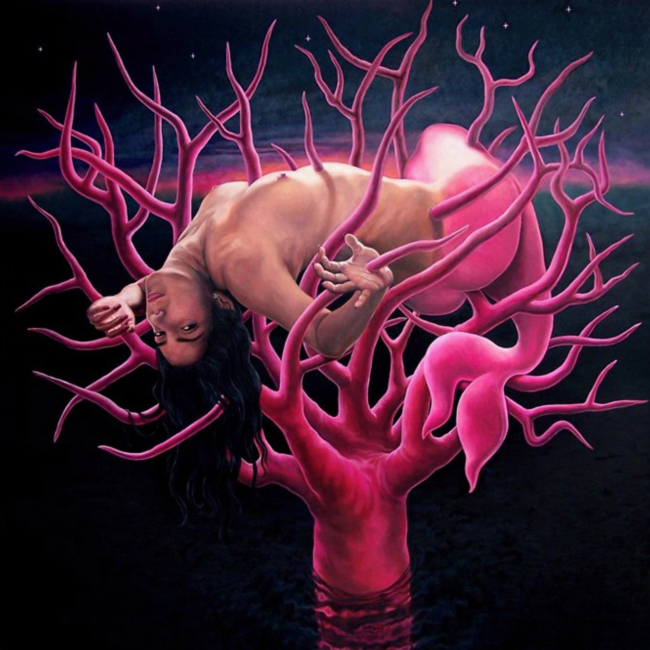
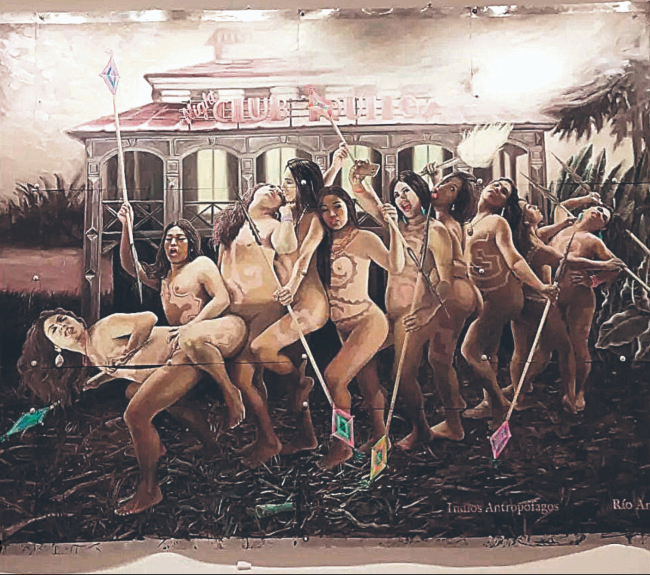
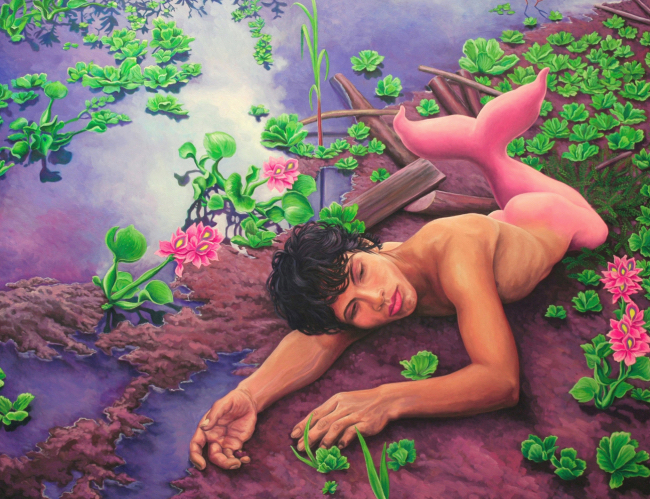
In his paintings, worlds meet that at first glance seem to have little in common: religiosity and nightlife, intimacy and public display, popular aesthetics and art-historical references, local imagery and global consumption.
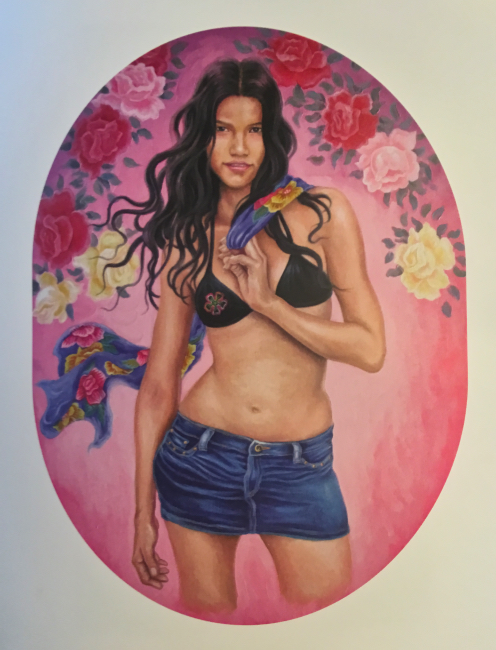
Bendayán’s gaze can turn to the everyday and familiar as readily as to the uncomfortable or provocative.
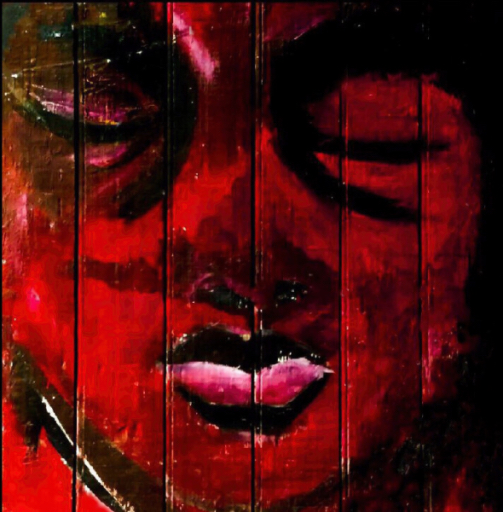
A quiet portrait can be treated with the same seriousness as social conflict or the darker sides of urban life.
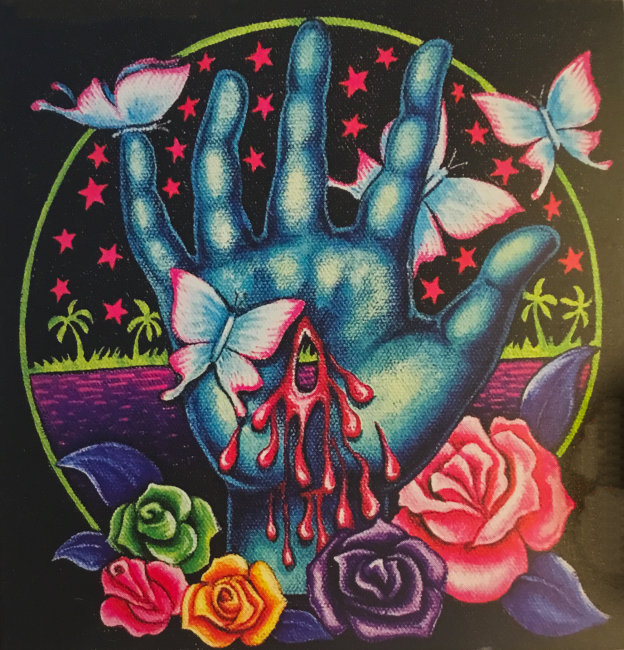
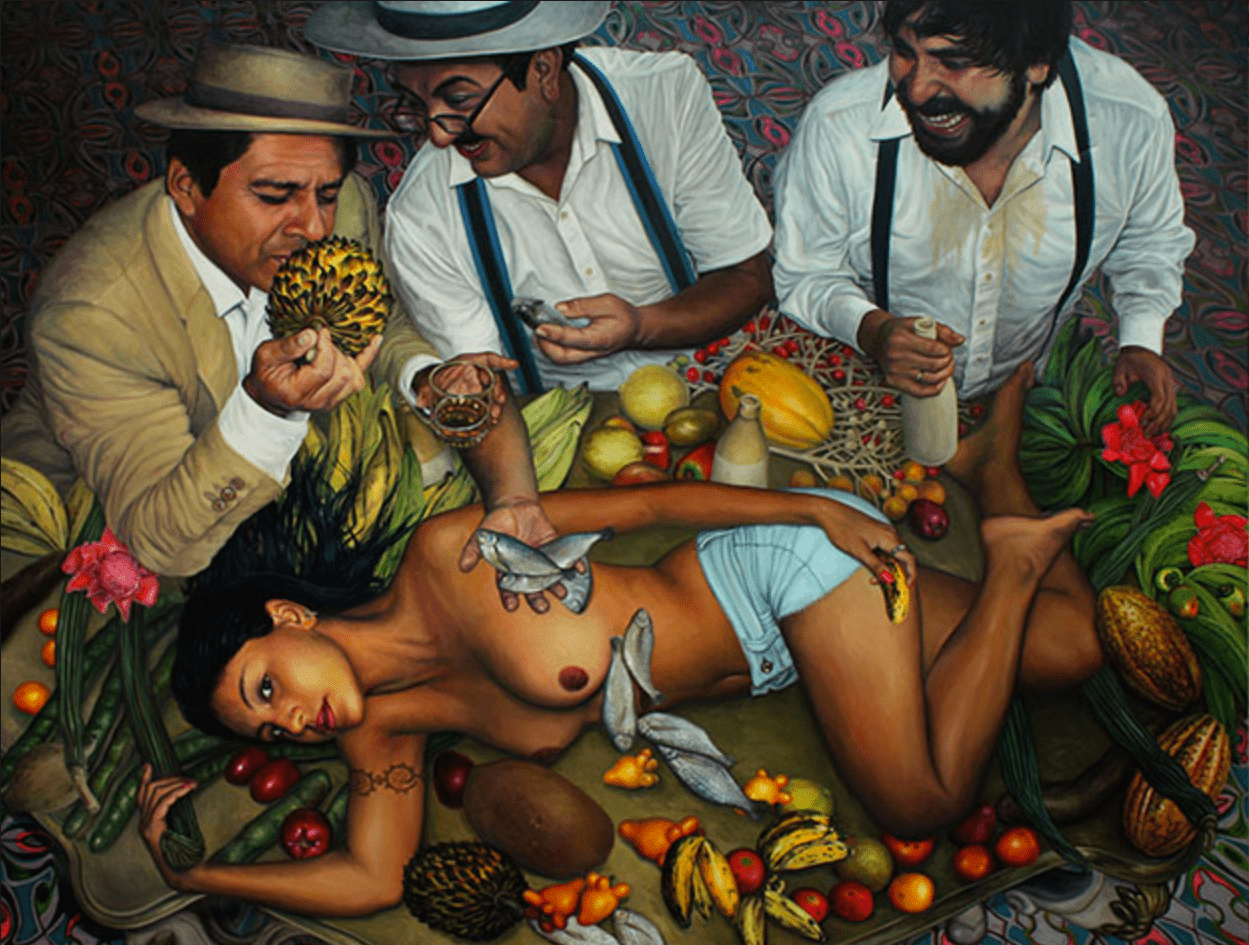
He takes this same freedom aesthetically. His technically accomplished painting merges with the visual language of posters, bars, brothels, religious iconography, popular decoration, and commercial entertainment.
Trivial everyday culture and popular kitsch coexist, on equal footing, with classical pictorial traditions.
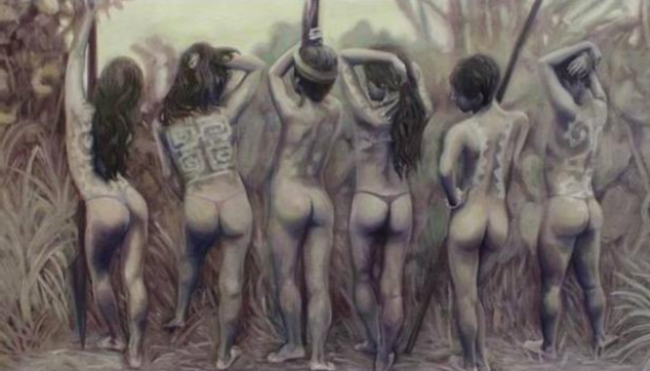
A central aspect of his work is his engagement with exoticism. Bendayán undermines the cliché that long portrayed the Amazon as a strange, wild, timeless, or purely natural world, and that reduced its inhabitants to extras in an exotic backdrop.
Yet he does not replace this image with a new, simplified counter-image. Instead, he widens the field of vision to include experiences and ways of life that rarely appear in romanticized depictions of the Amazon.
People with their personal histories, desires, and conflicts move into the foreground. The sacred stands alongside the profane, the beautiful alongside the obscene, strength alongside vulnerability, celebration alongside social conflict, inherited imagery alongside the signs of the present.
This openness has repeatedly made Bendayán’s work controversial. Yet behind this intensity lies decades of engagement with the history, art, and visual culture of the Amazon.
As an artist, curator, and publisher, he has played a decisive role in changing how Amazonian art is perceived, both within Peru and internationally.
His significance therefore extends beyond his own painting. Bendayán has expanded the space of what Amazonian art can be and show.
This, too, is where the political dimension of his work lies.
He treats the Amazon neither as a mere symbol nor as an exotic spectacle, but as a lived experience, saturated with personal and collective histories in which ancestral heritage, colonial history, and the urban present collide. The Amazon no longer appears as a backdrop, but as a counterpart.
Christian Bendayán is one of the most influential artists in contemporary Amazonian art.
His work has been exhibited internationally in museums and cultural institutions;
in 2019 he represented Peru at the Venice Biennale.