Shipibo Ceramics
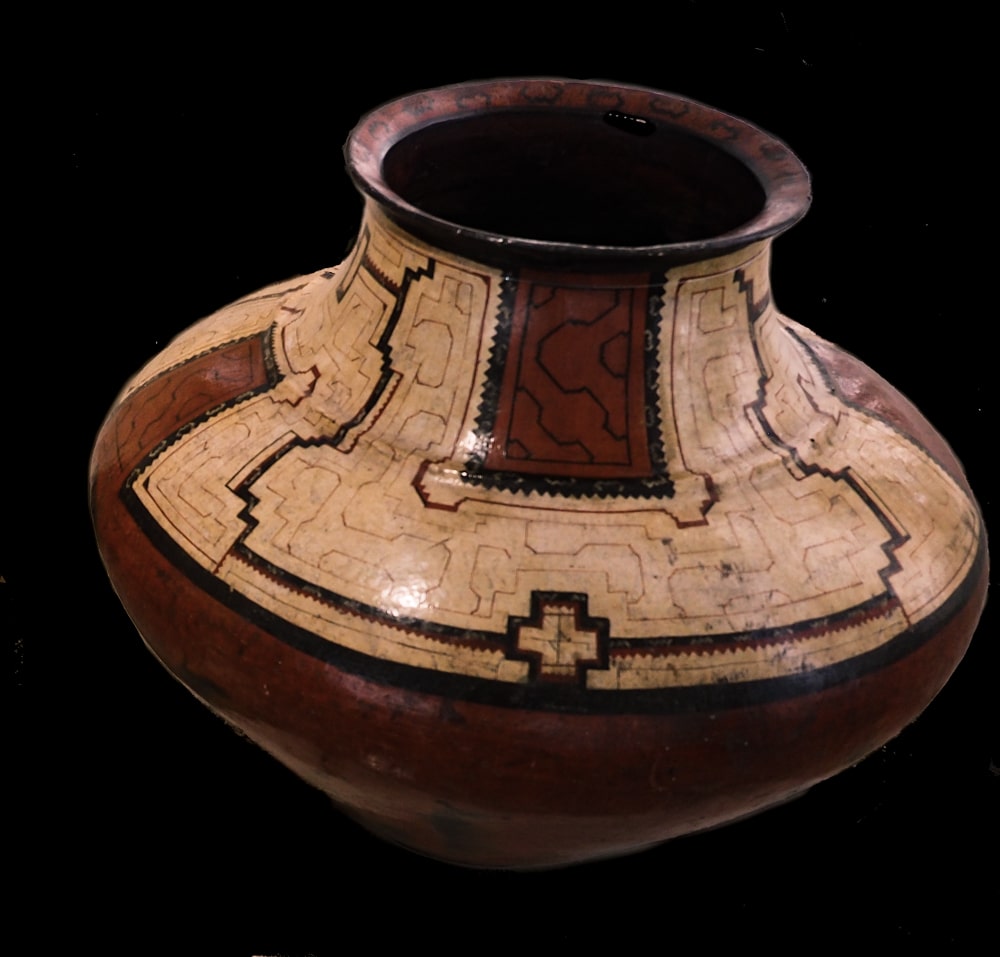
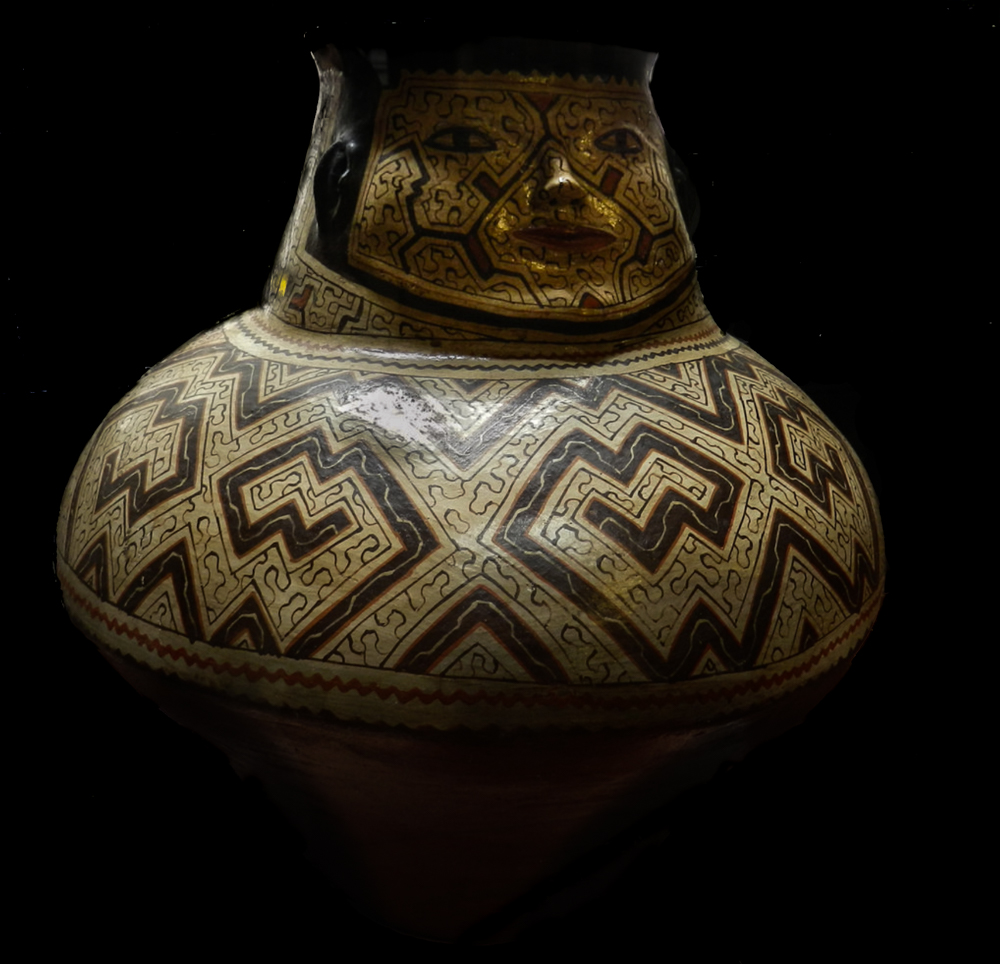
Ceramics represent the Amazonian worldview: everything that exists above in the sky also exists below on the earth, and both mirror one another.
Thus, the constellations correspond to the rivers, and the bold lines that run between them symbolize the shifting of the canoe guided by the Sun.
The artist acts as a mediator between the material world and the world of spirits.
The creation of each object is perceived as an opportunity to express cosmic beliefs through the powerful symbolic and spiritual content of its designs..
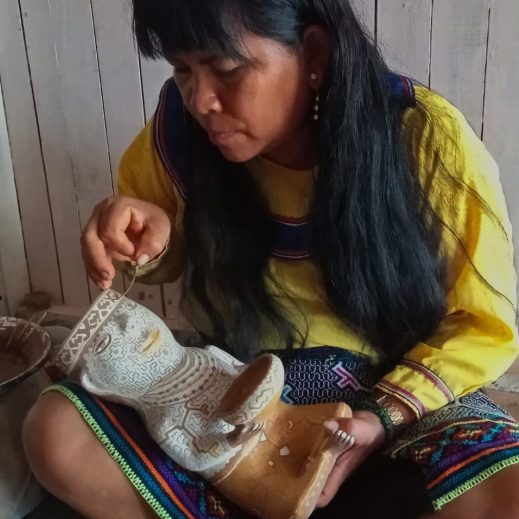
Lily Sandoval Panduro
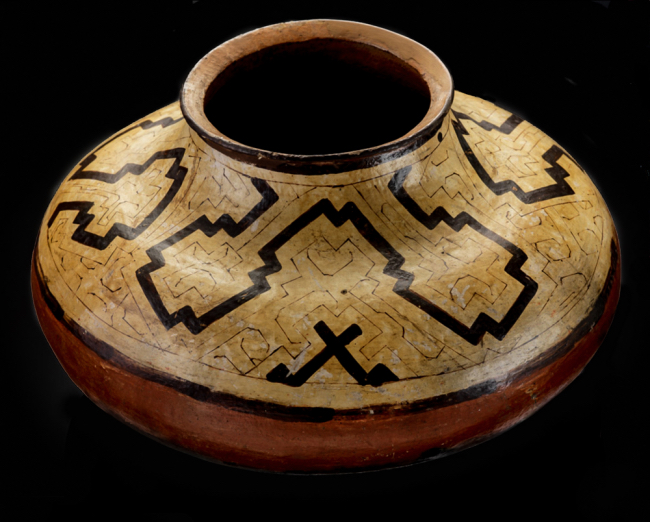
Shipibo ceramics represent a unique and intricate form of artistic expression deeply rooted in the cultural heritage of the Shipibo-Conibo people, an indigenous community residing in the Amazon rainforest of Peru.
While Shipibo textiles are widely celebrated, Shipibo ceramics are equally captivating, showcasing the community’s exceptional craftsmanship and artistic ingenuity.
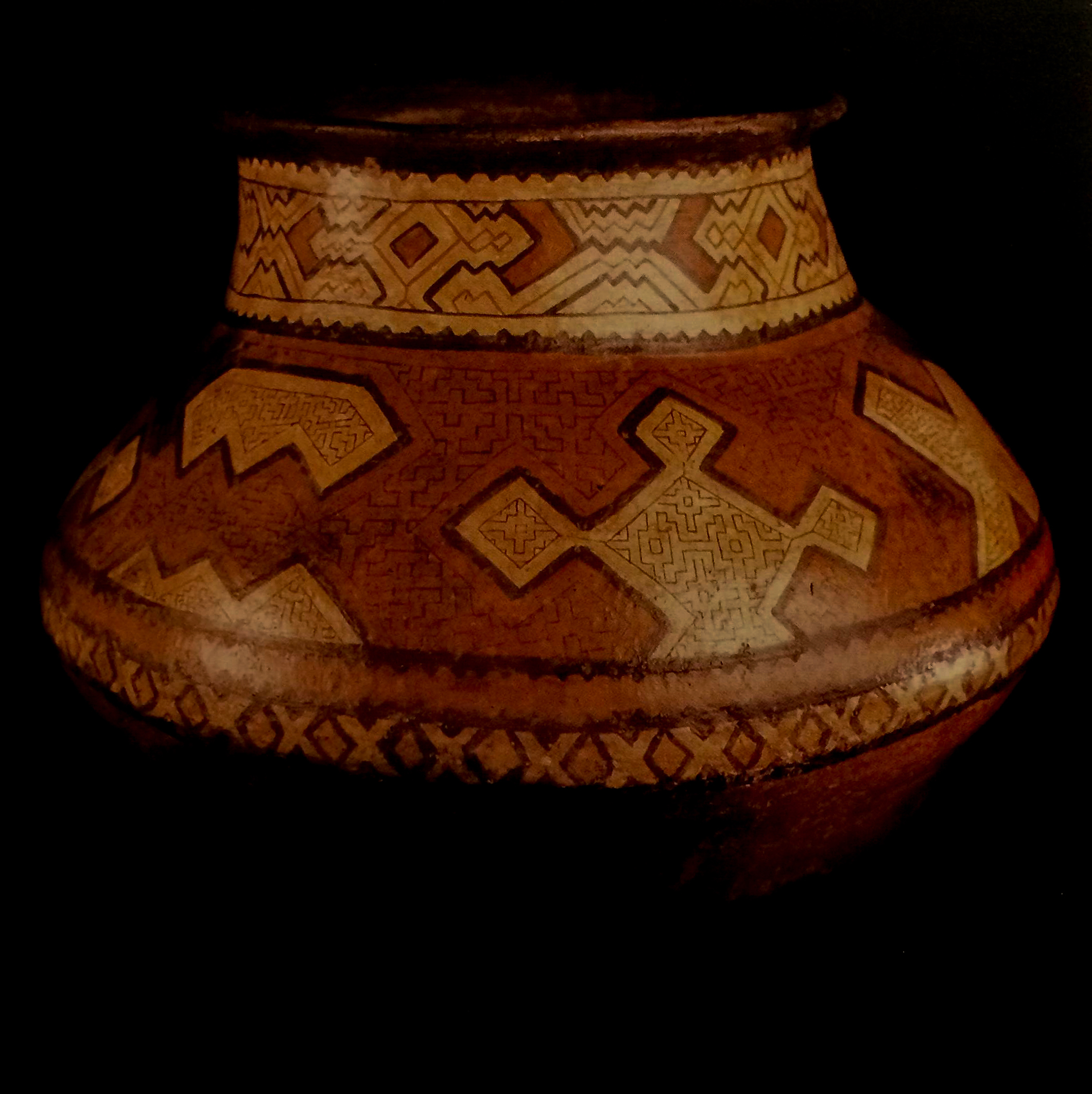
Crafted with meticulous care and attention to detail, Shipibo ceramics often feature elaborate geometric patterns and symbolic motifs.
These patterns are not merely decorative but carry profound cultural significance, embodying the community’s spiritual beliefs, cosmology, and connection to the natural world.
The motifs painted on Shipibo ceramics are a visual language, each telling a story, conveying spiritual wisdom, or representing the interconnectedness of all living things.
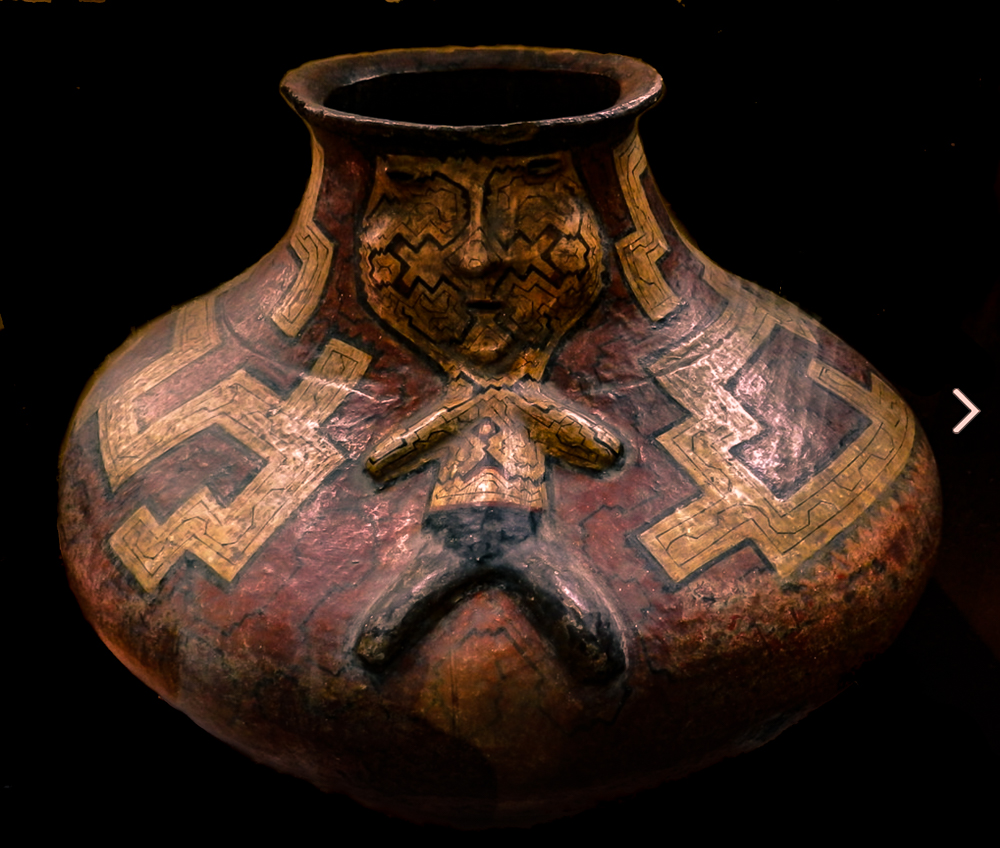
The process of creating Shipibo ceramics is labor-intensive and collaborative.
The clay used is typically locally sourced, and skilled artisans within the community shape and mold vessels or figurines.
After the initial form is crafted, the ceramic surface is meticulously painted with intricate patterns using natural plant-derived pigments, just as in Shipibo textiles.
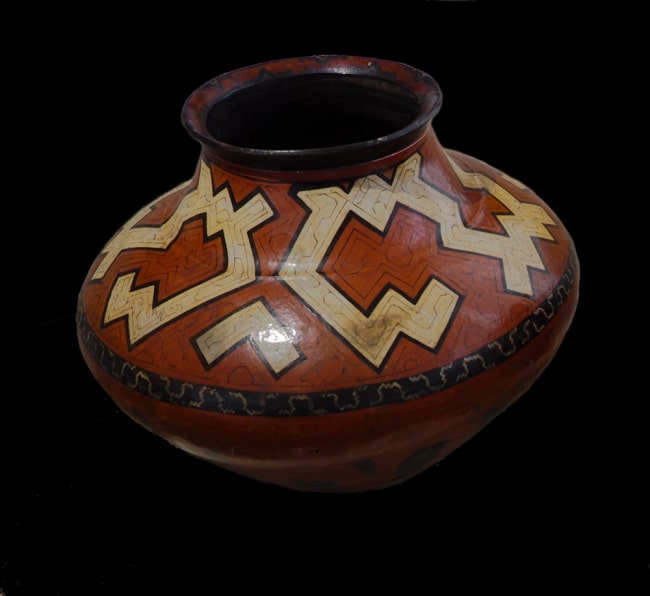
One distinctive aspect of Shipibo ceramics is the use of the “kene” or “kené” patterns, which are also found in Shipibo textiles. These geometric designs, characterized by spirals, zigzags, and intricate geometric shapes, are believed to hold spiritual and protective qualities.
The application of these patterns transforms the ceramic pieces into more than mere objects; they become vessels of cultural heritage, carrying the stories and spirituality of the Shipibo people.
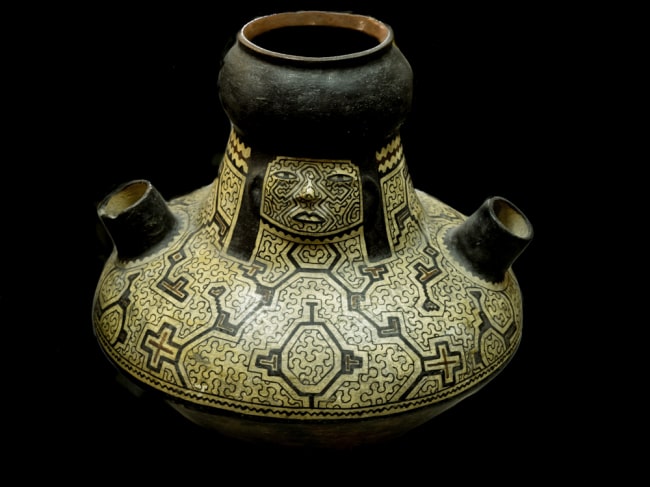
La artista aboga por la preservación de ciertos conocimientos de la selva, incluyendo cosmovisiones y saberes comunitarios.
Considera crucial que estos conocimientos no se pierdan en la vorágine del tiempo, ya que son esenciales para la identidad cultural y la conexión íntima con la naturaleza.
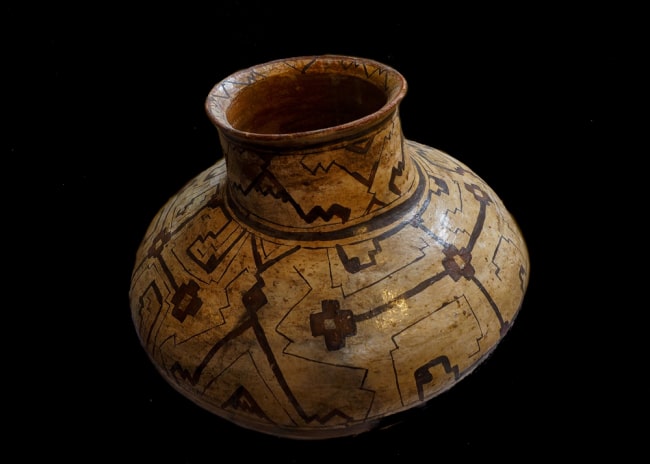
Shipibo ceramics are not only art for art’s sake; they play a role in the community’s rituals and ceremonies.
Often used in spiritual practices and traditional ceremonies, these ceramics become integral elements in the expression of Shipibo cosmology.
They may be utilized as containers for ritualistic elements, offering a tangible connection to the sacred.
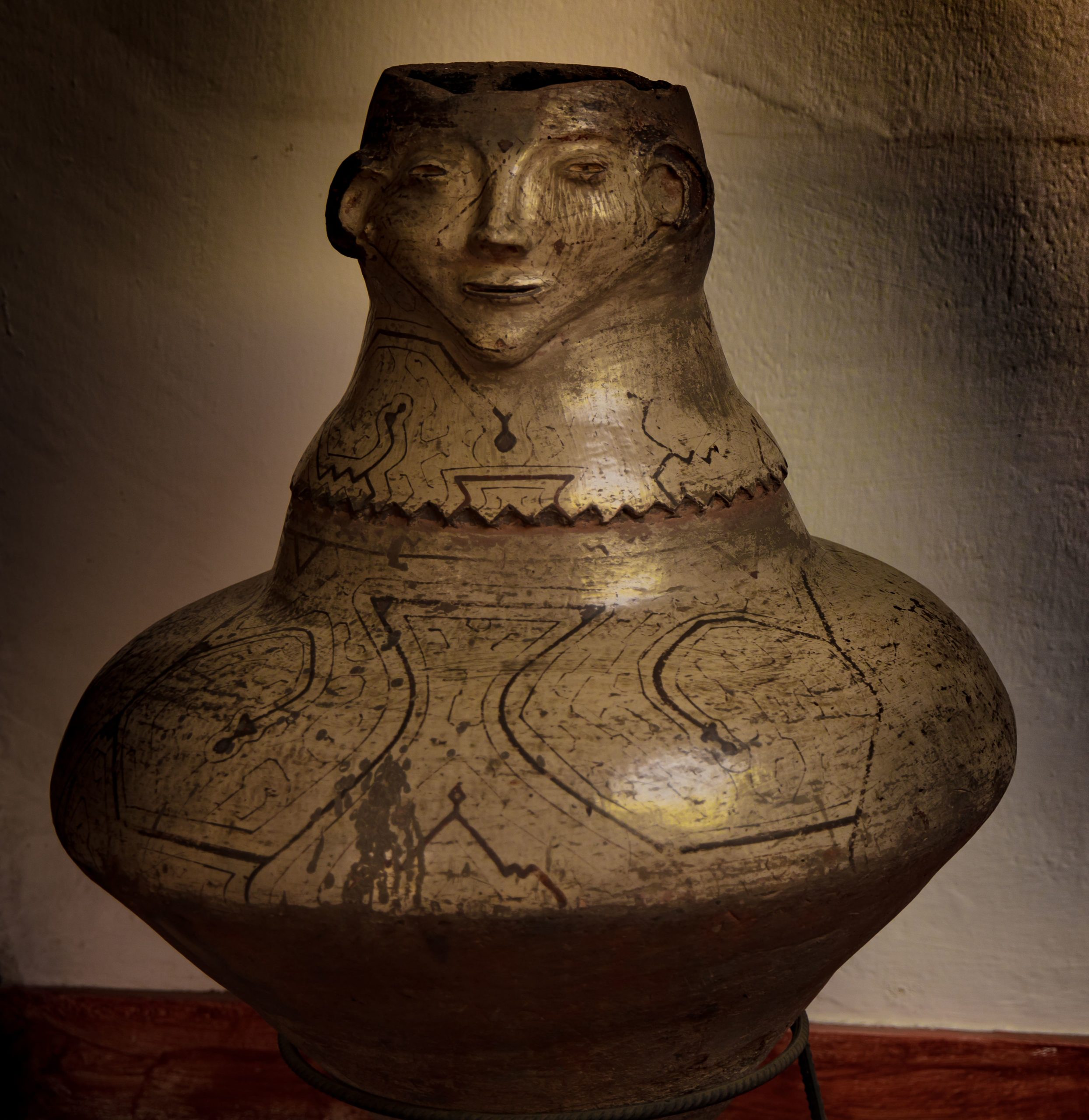
In recent years, Shipibo ceramics have gained recognition beyond the local communities.
Art enthusiasts and collectors worldwide are drawn to the intricate designs and cultural depth embedded in these creations.
This growing appreciation has led to collaborations between Shipibo ceramic artists and contemporary designers, creating a bridge between traditional craftsmanship and modern artistic expressions.

In essence, Shipibo ceramics stand as both a testament to the artistic prowess of the Shipibo-Conibo people and a means of preserving and transmitting their cultural heritage.
Through the hands of skilled artisans, each ceramic piece becomes a vessel of stories, traditions, and spiritual significance, fostering a profound connection between the indigenous community and the wider world.