Chiribiquete:
Stone Age Rock Art of the Amazon
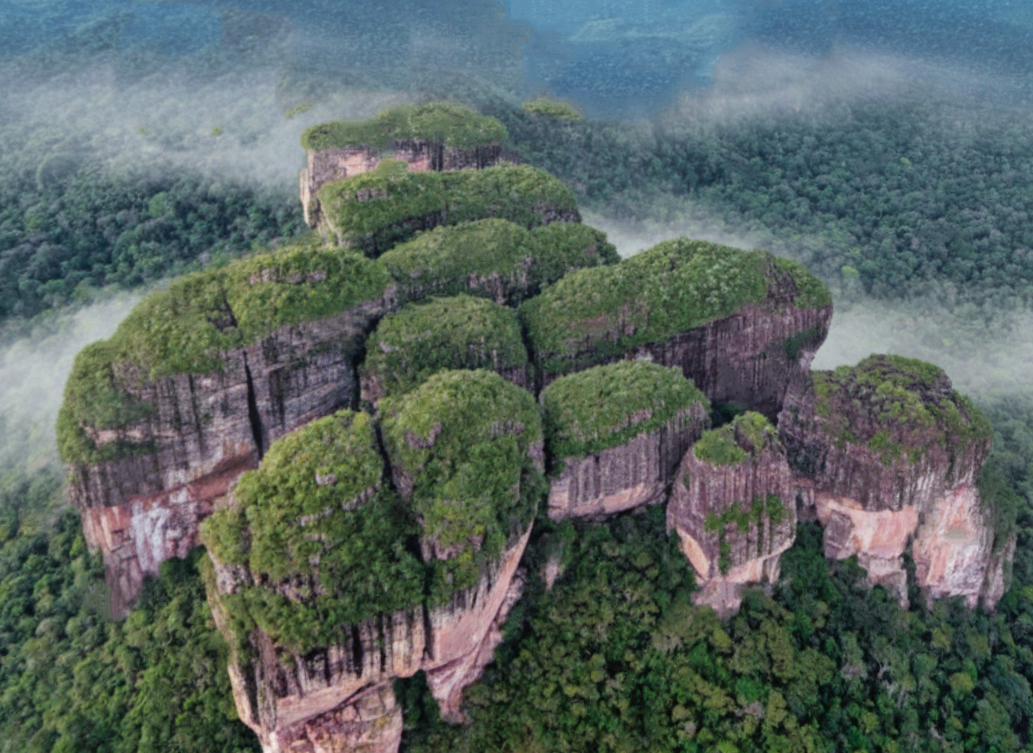
Chiribiquete, known as the “House of Jaguars,” is a remote region in the Colombian Amazon. Its heart is the Serranía de Chiribiquete—an imposing high plateau that rises from the vast rainforest, dominating the landscape with its majestic silhouette.
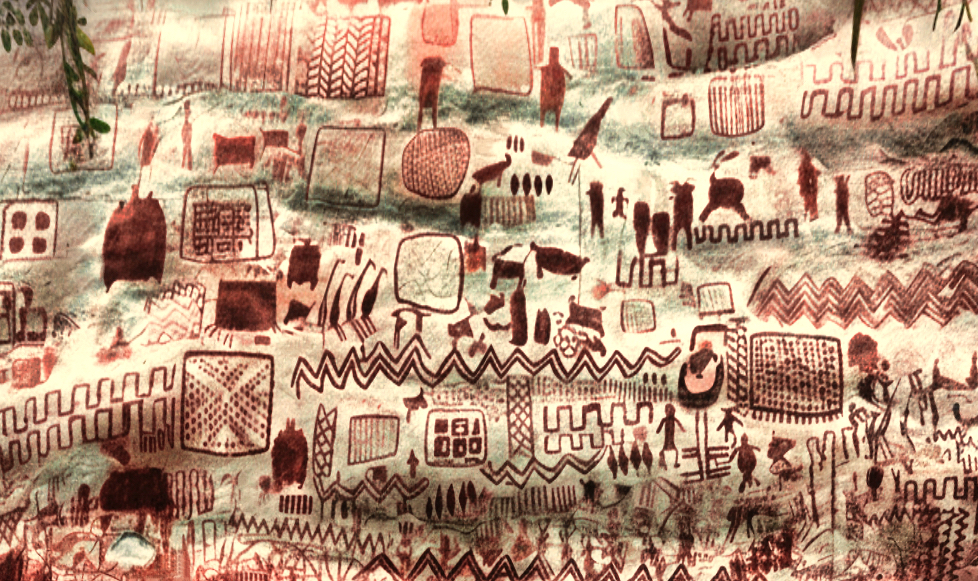
It impresses with its untouched natural beauty and extraordinary flora and fauna. It is world-famous primarily for its tepuis (table mountains), which preserve an archaeological treasure of unique significance: its prehistoric rock paintings.
However, these pictograms are far more than just art; they are living chronicles. They document the evolution and development of the ancestors of a fascinating civilization that has lived in the Amazon rainforest for millennia and for whom it remains home to this day.
With impressive narrative power, they transmit the history and heritage of these people across millennia, from the last Ice Age right up to the present day.
Created on the rocks of Chiribiquete, they tell of the ancient hunt for Ice Age animals that have been extinct for thousands of years. They guide us through the various epochs, from the fateful encounters with the Spanish and their devastating consequences, the subsequent conflicts during the rubber boom, and the eventual retreat into isolation.
A Window into the Past of Humanity
The rock paintings are a window into the past of human history and a testament to the diverse and profound experiences of our ancestors on this continent. They are living testimonies to the creativity, resilience, and cultural depth of civilizations in the Amazon rainforest, as well as an inexhaustible source of historical insights and knowledge that show us how much there is still to learn about our past.
In this way, Chiribiquete not only guides us into a distant past but also connects us with a present full of mysteries and wonders. It is a space where history, culture, and nature uniquely merge, encouraging us to uncover the hidden secrets of the Amazon and its mysterious inhabitants.
The Discovery: Rock Paintings, History, and Secrets
The history of Chiribiquete is truly fascinating. It all began in the 1980s when Carlos Castaño-Uribe was flying his Cessna over the Amazon rainforest and was thrown off course by a sudden storm. Through the clouds, a breathtaking sight appeared to him: a tepui (table mountain) rising majestically from the rainforest.
Intrigued, he circled the area and discovered an entire mountain range that was not recorded on any map. He decided to explore this mysterious place more closely.
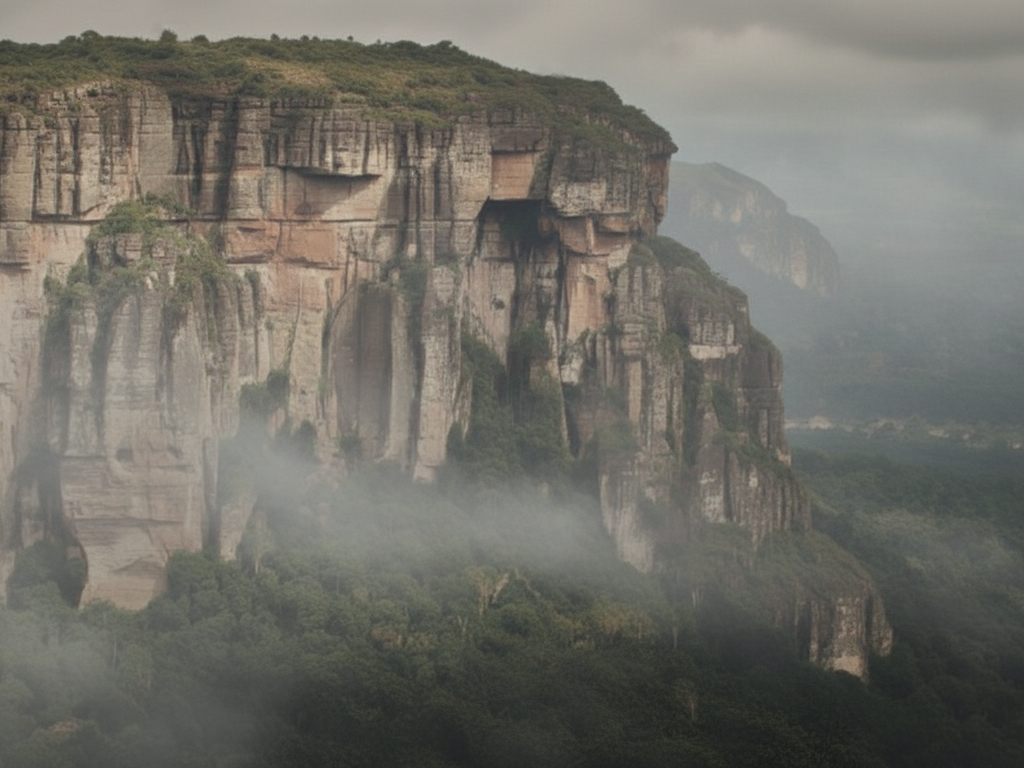
A year later, Castaño-Uribe returned by helicopter and discovered the enigmatic pictograms on this mountain, which stretched along a sandstone rock face over 14 kilometers long. He decided to dedicate his life from then on to the exploration of Chiribiquete.
His efforts were crucial for the establishment of the national park in 1989. With an area of $42,681\ \text{km}^2$, it is the largest tropical national park in the world. It was recognized as a UNESCO World Heritage Site in 2018.
The rock paintings found in the park serve as a history book spanning millennia, continually updated by the indigenous inhabitants of the region. These ancient paintings, some of which are up to 20,000 years old according to radiocarbon dating, demonstrate the enduring creativity and artistic skill of the native communities.
The park’s rock art, which ranges from the oldest times to the 1970s and beyond, is a unique chronicle. It combines artistic expression, historical testimony, and unexplored secrets that lay hidden deep within the Amazon rainforest until recently.
The Sistine Chapel of the Amazon Rainforest
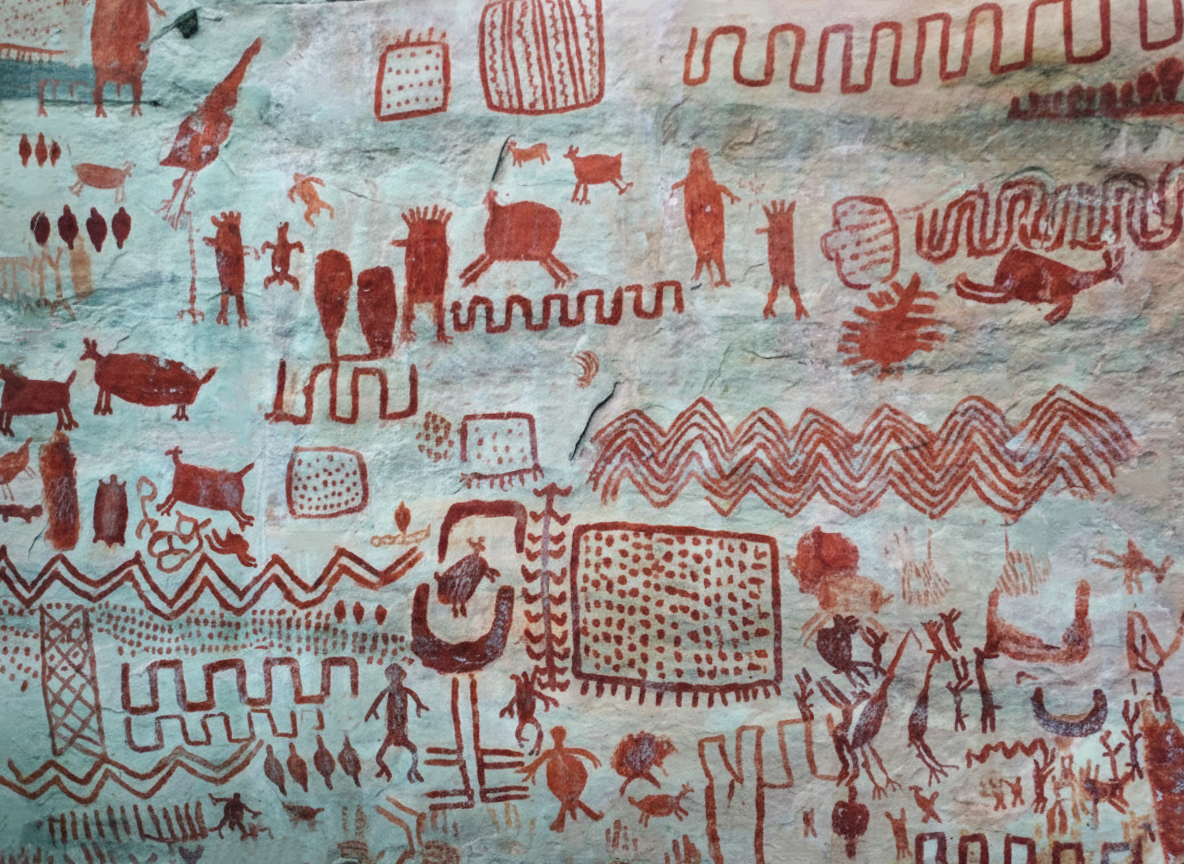
The sandstone walls of Chiribiquete house an impressive collection of over 75,000 petroglyphs and pictograms, which unveil the fascinating history of humanity in the rainforest spanning millennia.
These captivating depictions, meticulously carved and painted onto the steep rock faces, offer us an insightful look into the deep-rooted beliefs, venerable traditions, and timeless narratives of the indigenous peoples for whom the Amazon rainforest has been a home throughout human history.
They are not just a window into the past, but also a homage to the universal creativity of the human spirit—an impulse that always sought to express thoughts and feelings through visual representations.
The study of these prehistoric artworks provides us with a unique insight into the cognitive and cultural development of earlier societies, broadening our understanding of the human experience and opening new horizons for the understanding of our shared history.
A Realm of Magic and Wonder
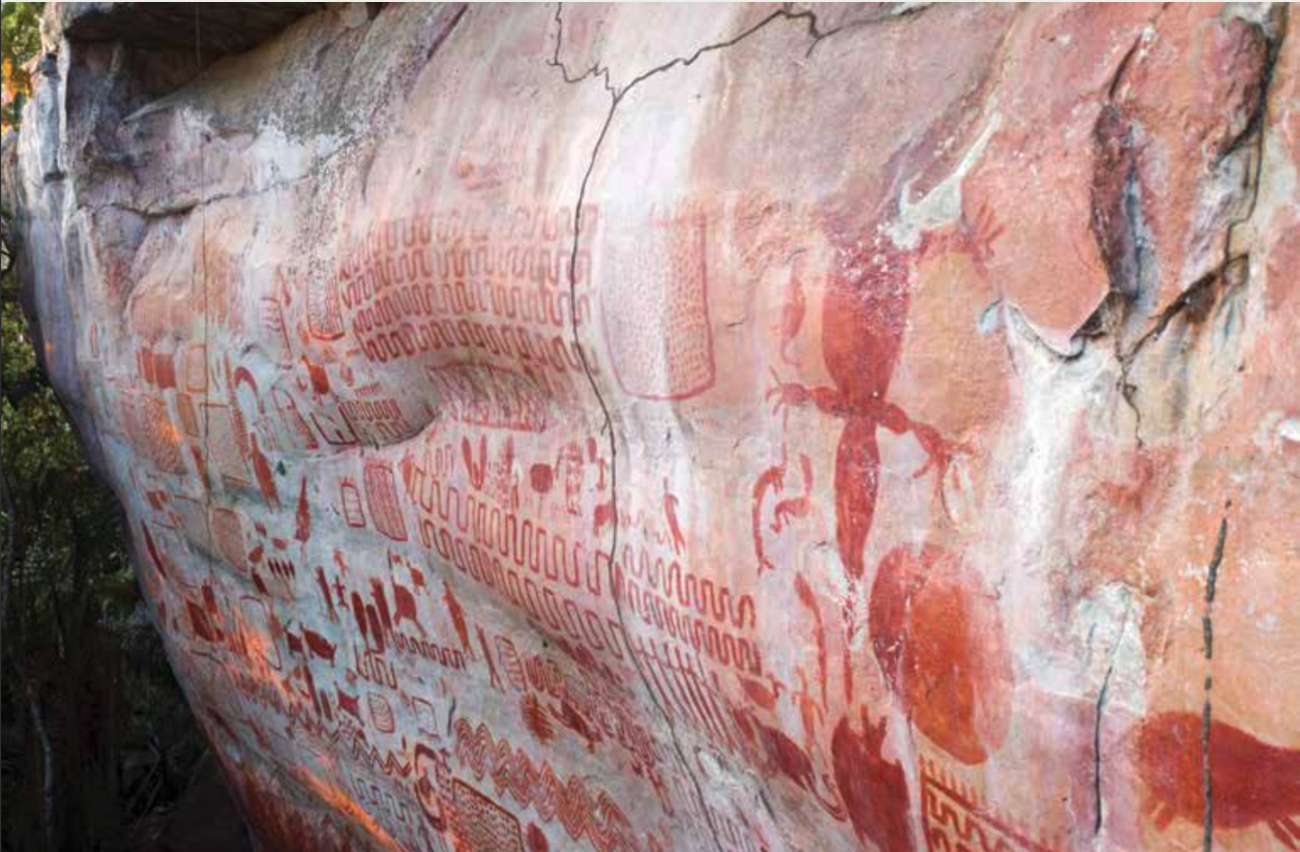
The earliest inhabitants of the Amazon practiced their art on the sandstone walls of Chiribiquete, and these paintings are an extraordinary testament to their worldview (cosmovision). Chiribiquete is still considered mythologically significant by several tribes and is known as the “Great Home of the Animals.”
The diversity of often realistic motifs, as well as the continued use of these sites by uncontacted communities for ceremonies, underscores that this is a legendary place considered sacred by the tribes who live there. They emphatically demand that it remain inaccessible to the public.

Indigenous Ways of Life for a Sustainable Future
Located at the intersection of four biogeographic provinces—Amazonia, Andes, Orinoco, and Guiana—Chiribiquete has given rise to a remarkable diversity of indigenous cultures. Each possesses its own unique traditions, languages, and knowledge of the rainforest.
The area is home to several indigenous groups, including the Karijona, the Nukak Maku, and the Uitoto, who have lived there for millennia and developed a profound understanding of their ecosystems. Indigenous knowledge demonstrates how to utilize resources without destroying them.
Cultural practices such as hunting, gathering, and sustainable resource management have been instrumental in preserving the region’s pristine nature and wildlife. These communities offer a living example of how to live in harmony with the environment.
Their deep connection to nature reveals how they value and conserve resources while understanding the importance of long-term preservation. Their intergenerational knowledge of plants, agroforestry, and life in the forest is invaluable.

A Living Testament Hidden in the Rainforest
For a long time, it was believed that there were no humans in the Americas 20,000 years ago. However, discoveries of cave paintings in Chile and Brazil, which are just as old as Chiribiquete, prove the opposite.
The first pictograms were created during the last Ice Age, which is why they depict animals that have been considered extinct for millennia or whose past presence in the Amazon was previously unknown. Chiribiquete holds many secrets, but given the scale of the site, it is hypothesized that it may have served as a spiritual center—a kind of “Jerusalem of the Amazon.”
Research into this impressive complex is still in its earliest stages; it promises many surprises and invites fascinating hypotheses. Recently, it was discovered that groups of indigenous people with no contact with civilization still live in the mountains. They are believed to be the last descendants of the otherwise extinct Karijona people. They have been observed painting images onto rock walls.
The rock art of the Serranía de La Lindosa is not merely a collection of images; it is a living testament to the enduring power of art and the profound impact of human presence on Earth.
Archaeological sites have always held a deep fascination for me, and each one evokes a very special feeling. Even though I have seen them in countless pictures and photographs, it is a truly unique experience to see them with my own eyes and personally feel their awe-inspiring presence on-site.
A Sacred Place in the Amazon
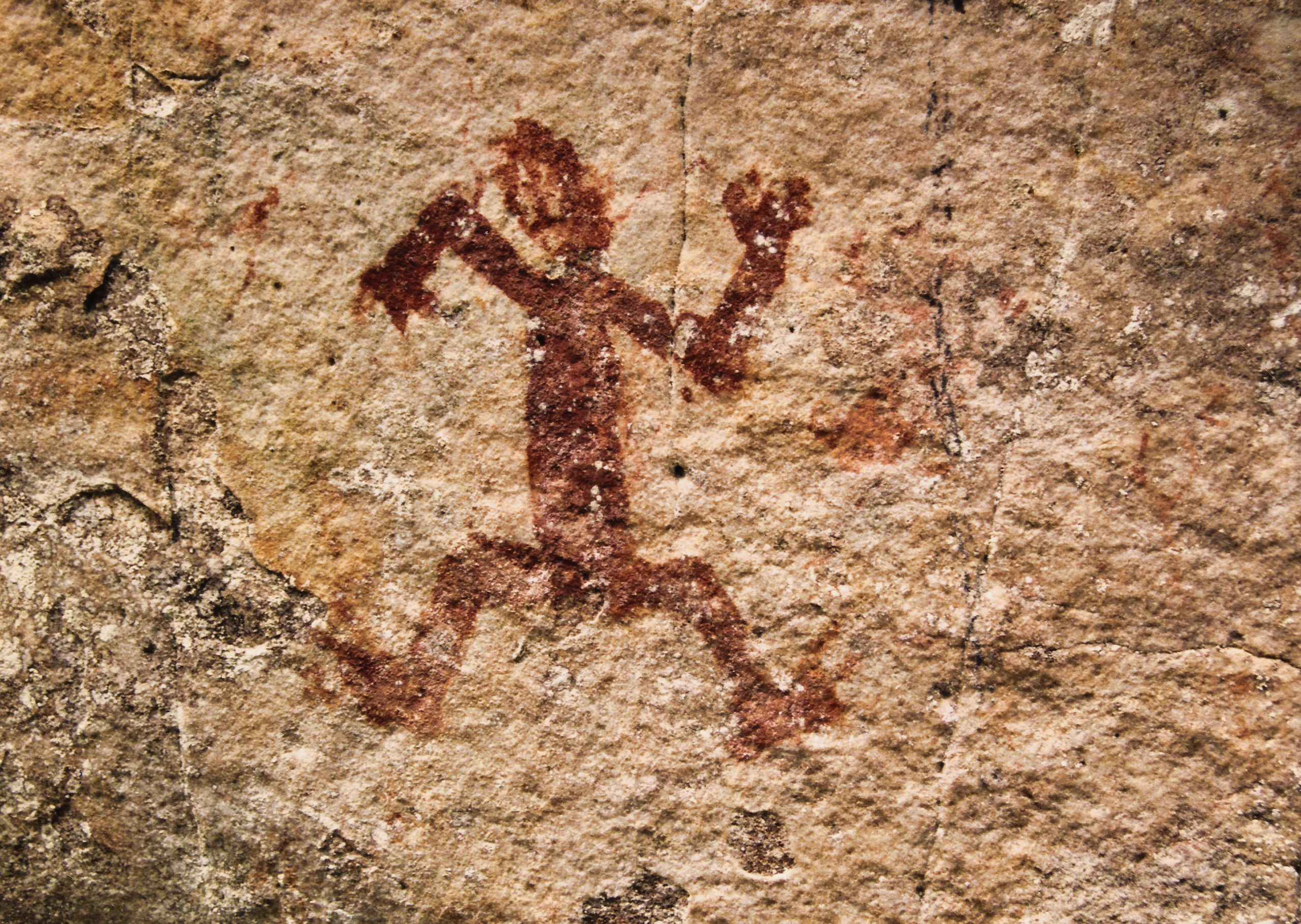
Chiribiquete could be one of the few, or perhaps the only place of such ancient origin that still hold ceremonial significance today. The prehistoric artworks on the weathered sandstone walls possess a fascinating charm and a simple beauty that transcends both time and the boundaries of language.
When viewing these works, one inevitably develops empathy and feels a deep connection to the people who created them. Chiribiquete is an enigmatic, mysterious place of immense cultural significance; it appears to be a bridge for communication with the spiritual world of the ancestors. It is a sacred place that whispers stories of the past, invites reflection on the present, and inspires a sense of reverence and respect for life and nature.
Visit anturiongallery.com.

written by Rolf Friberg
Related Articles
The Nukak Makú: Driven from Paradise
Explore the fascinating culture of the Nukak Makú, a nomadic indigenous tribe of the Amazon Rainforest. Hunters & gatherers in the twenty-first century.
The Nukak Makú: Driven from Paradise
Explore the fascinating culture of the Nukak Makú, a nomadic indigenous tribe of the Amazon Rainforest. Hunters & gatherers in the twenty-first century.
The Nukak Makú: Driven from Paradise
Explore the fascinating culture of the Nukak Makú, a nomadic indigenous tribe of the Amazon Rainforest. Hunters & gatherers in the twenty-first century.
0 Comments