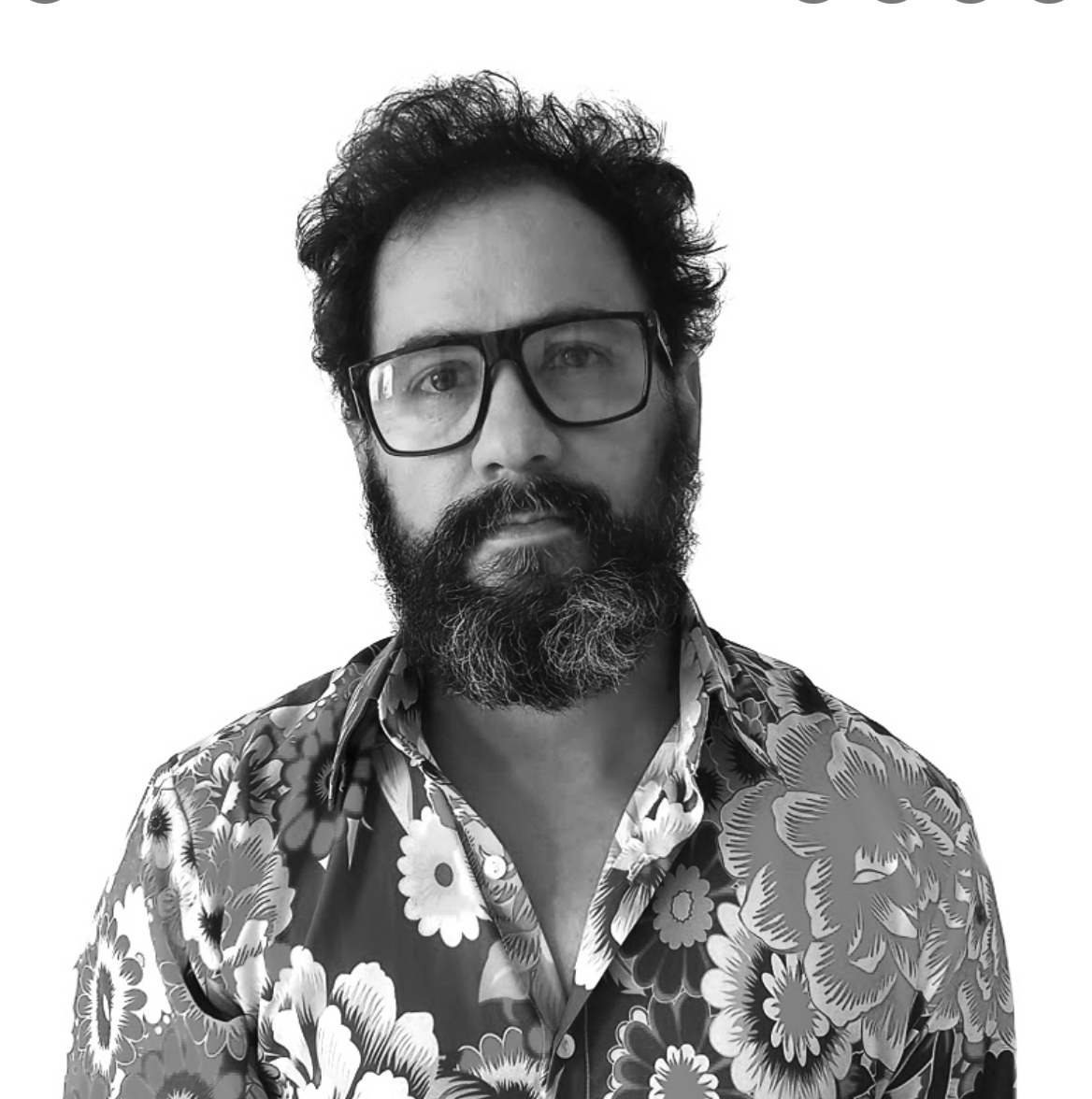
Christian Bendayán
“My work is a celebration where
the clichés about the jungle devour themselves.”
The Amazon has long been painted by others,
romanticized, exoticized, frozen in time.
Christian Bendayán paints from the skin,
from the forest that lives within him.
The Redefinition of Amazonian Art
Christian Bendayán (Iquitos, 1973) stands as one of the most insightful voices in contemporary Amazonian art. As a visual artist, researcher, and cultural mediator, his work grows out of lived experience.
He portrays the Amazon not as an idealized landscape or mythical territory, but as a social, urban, contradictory, and profoundly human space.
Bendayán’s artistic vision was forged in the streets of Iquitos — observing everyday life in its neighborhoods, popular rituals, music, and the tensions that pulse through them.
From his earliest works, he understood painting as a means to make visible those realities that rarely appear in official narratives about the Amazon.
In contrast to external gazes — whether romantic, scientific, or extractive — he proposes an internal and critical perspective, one fully aware of the region’s contradictions.
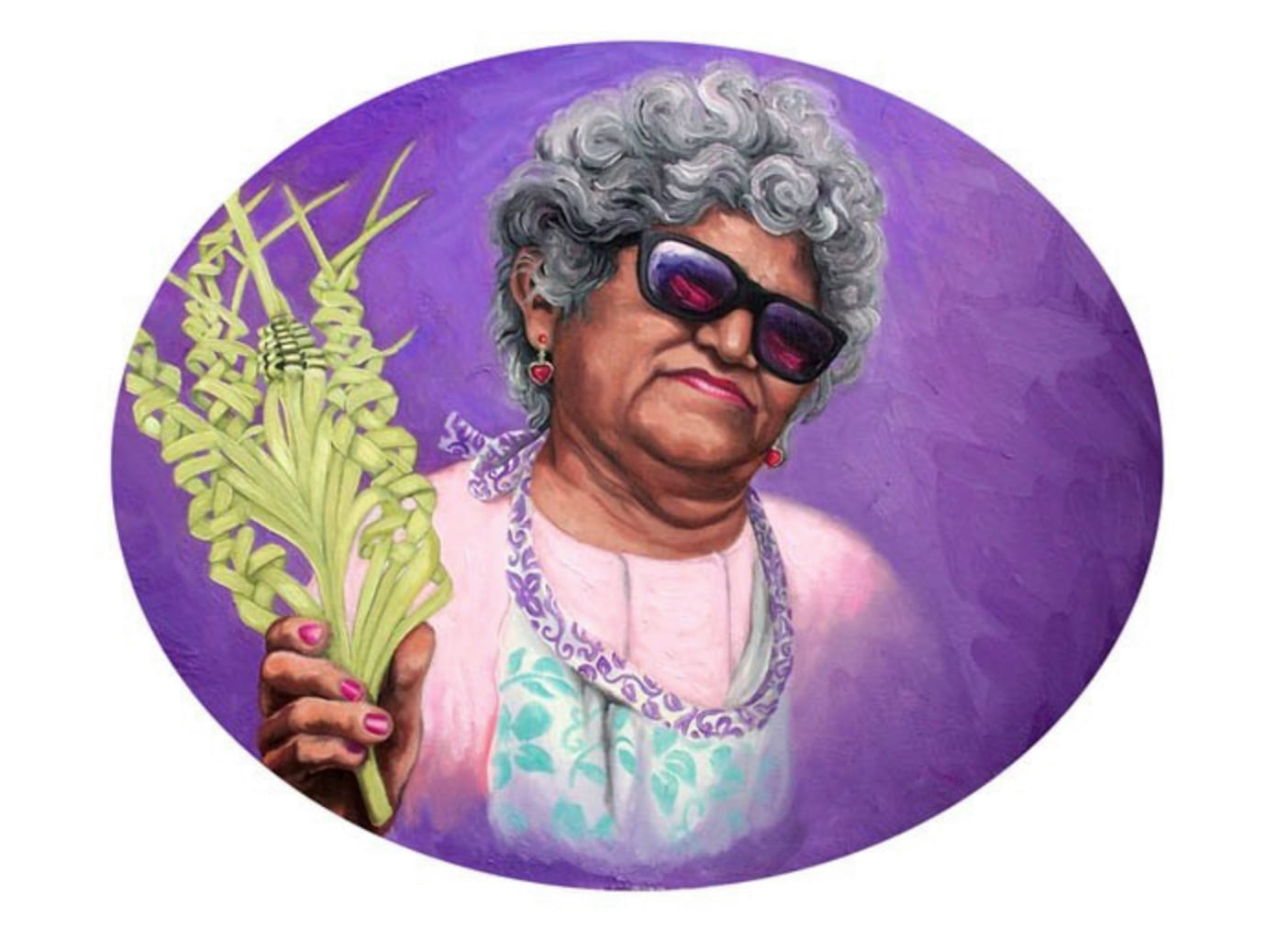
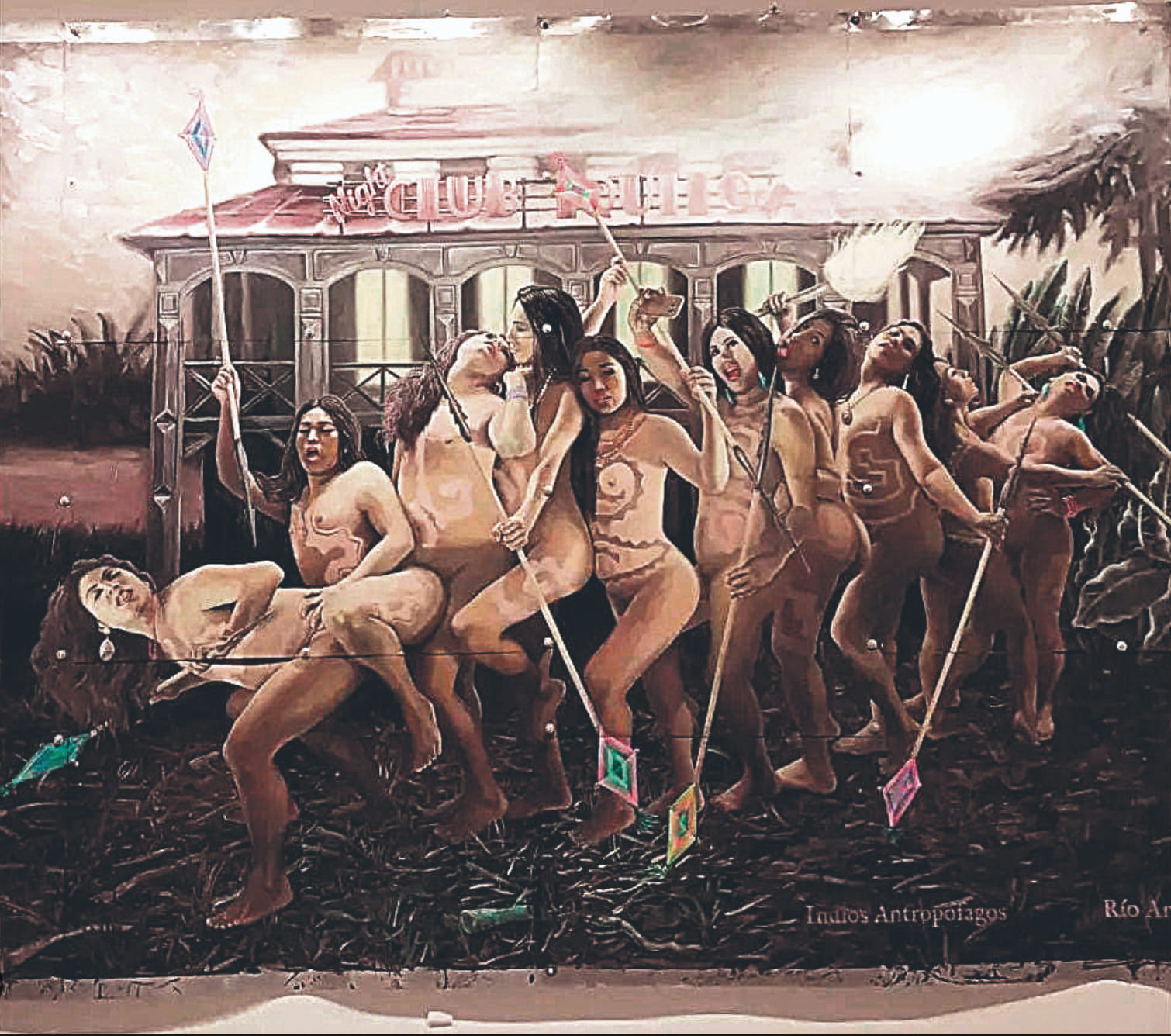
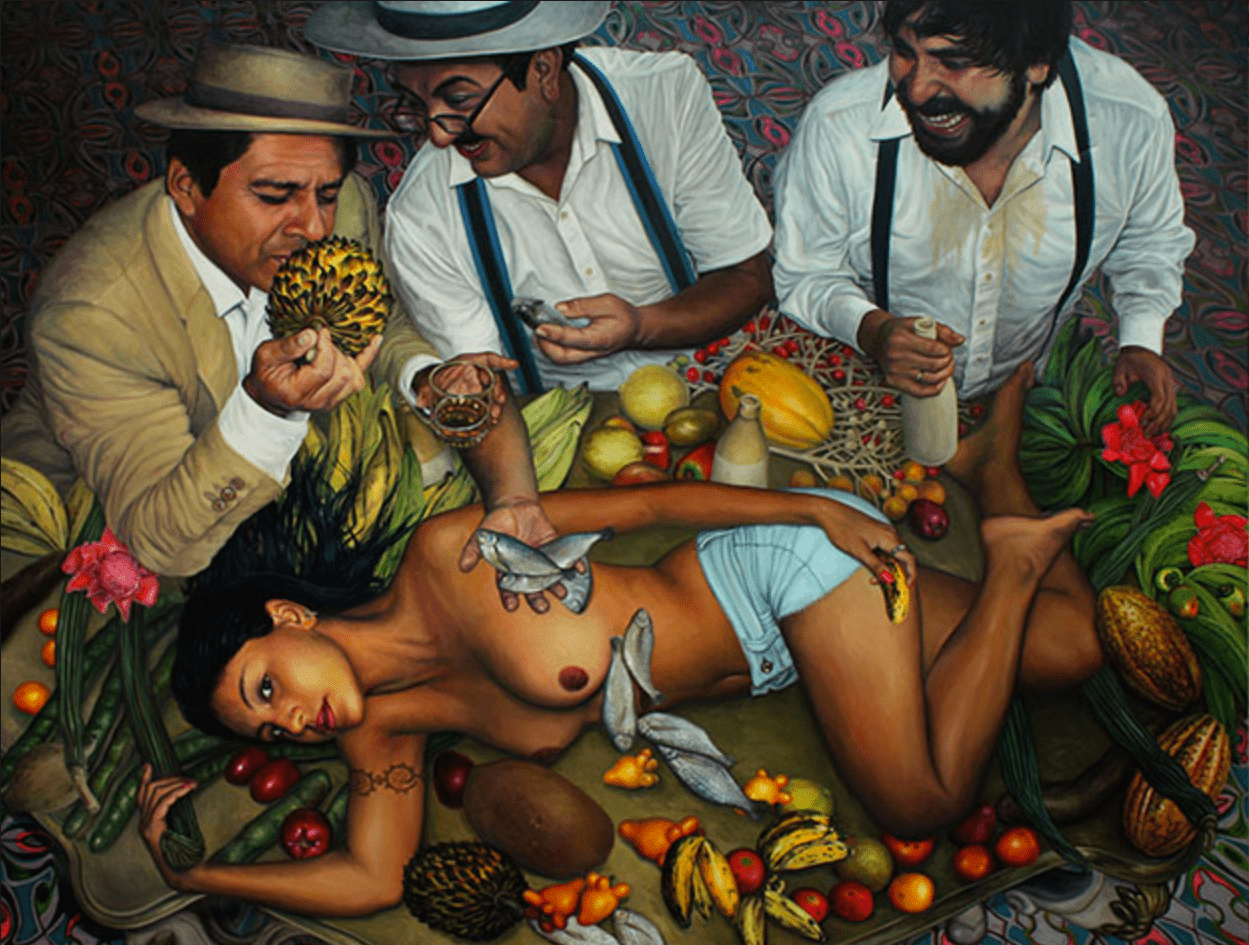
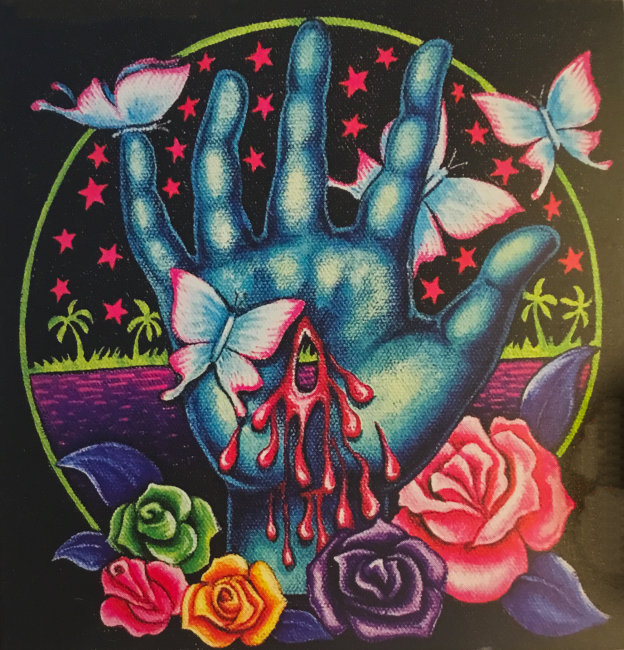
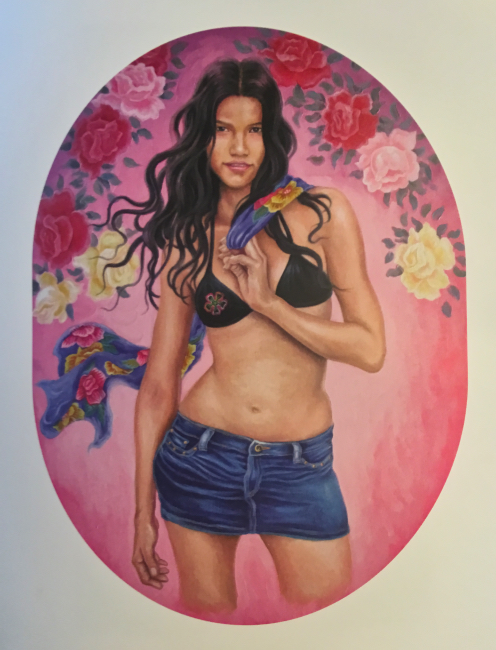
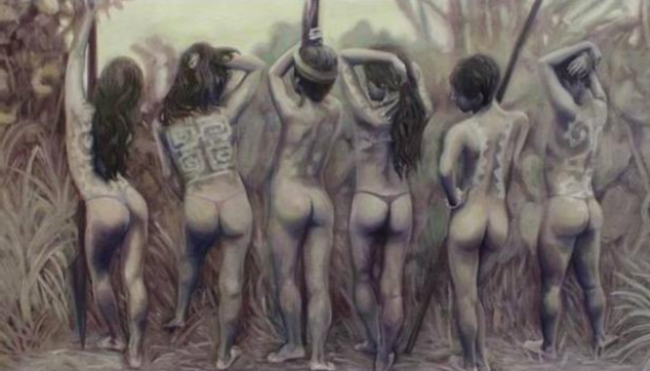
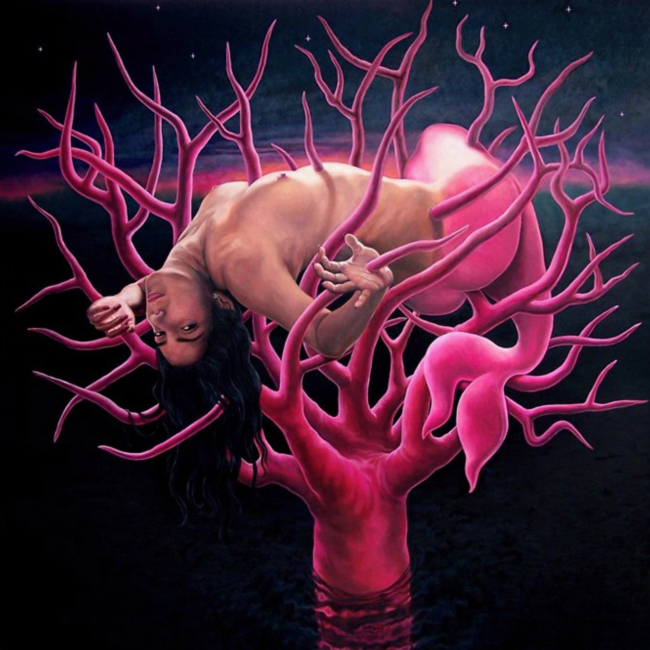
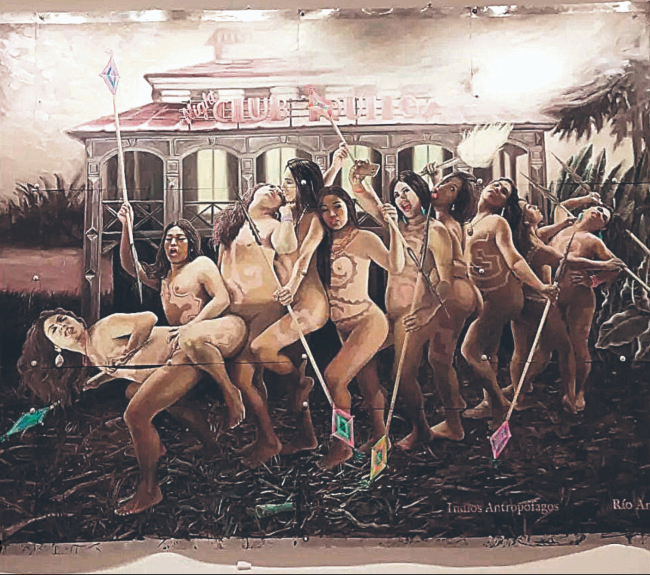
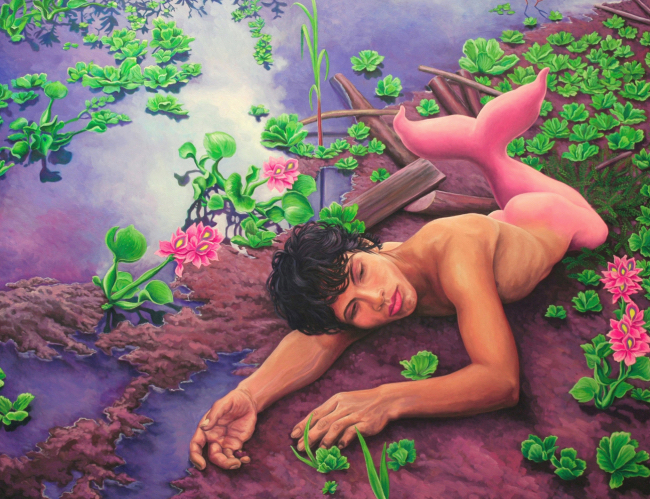
In his paintings, marginalized figures, dissident identities, nocturnal scenes, religious references, local mythologies, and symbols of global consumerism coexist without hierarchy.
Together they compose an image of a contemporary Amazon marked by desire, fragility, and longing — a multilayered living space permeated by the power of inherited traditions, colonial history, and the tensions of the present.
His work centers on a critique of exoticism. Bendayán deconstructs entrenched stereotypes of the Amazon as an alien, timeless, or purely natural world through which the region and its inhabitants have long been reduced to the exotic and deprived of their own voice. Instead, he places concrete people at the forefront — people with their own voices, personal stories, and real challenges. His art is both an aesthetic act and a form of cultural resistance against silence.
Beyond his artistic production, Bendayán has shaped the cultural landscape of the region itself. As director of cultural institutions in Loreto and curator of groundbreaking exhibitions, he has initiated editorial projects that document the history and present of Amazonian art. His publications construct a historiographic framework from within the region — a rare contribution within the Peruvian art historical landscape. His participation in the 2019 Venice Biennale marked an important milestone in the international visibility of Amazonian art, yet his work has never been driven by external validation.
Christian Bendayán does not paint the Amazon as symbol or spectacle. He portrays it as lived experience — as a territory woven through with personal and collective histories, where the ancestral, the colonial, and the contemporary meet, clash, and transform one another. His work invites us to see the Amazon not as we’ve been taught to imagine it, but as it actually exists: complex, contradictory, and vitally alive.


Gallery